
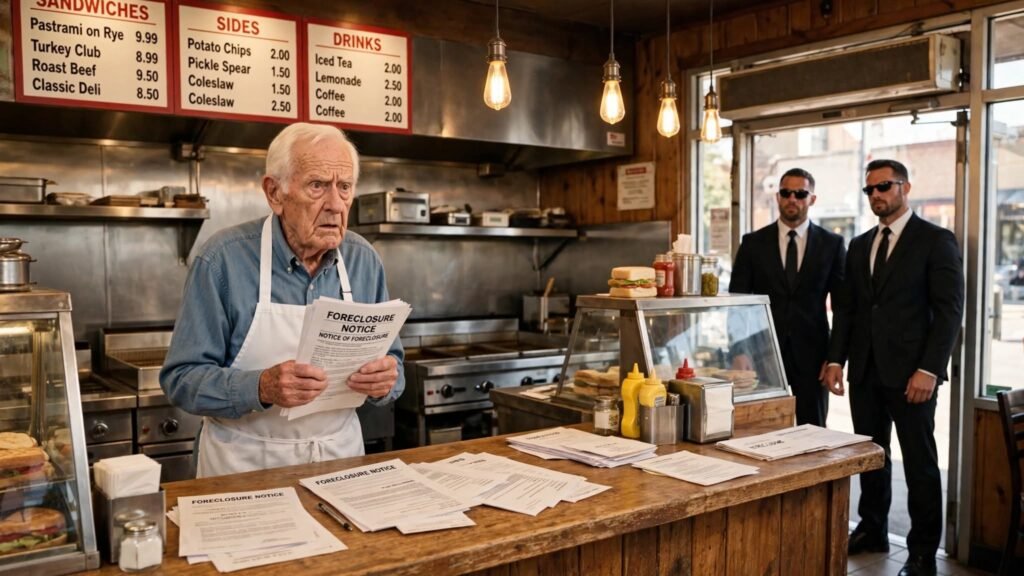
The paper was yellow and soft with age. It was torn at one corner and stained with something that might have been mustard, a long time ago.
Ethan squinted at it. Then his breath caught in his throat.
It was a sandwich wrapper. His sandwich wrapper. And across the front, in faded blue ink, were six words in his own messy handwriting:
Someday, you can help someone else.
His hands started to shake. “No,” he whispered. “It can’t be.”
The woman’s eyes filled with tears. “You remember me.”
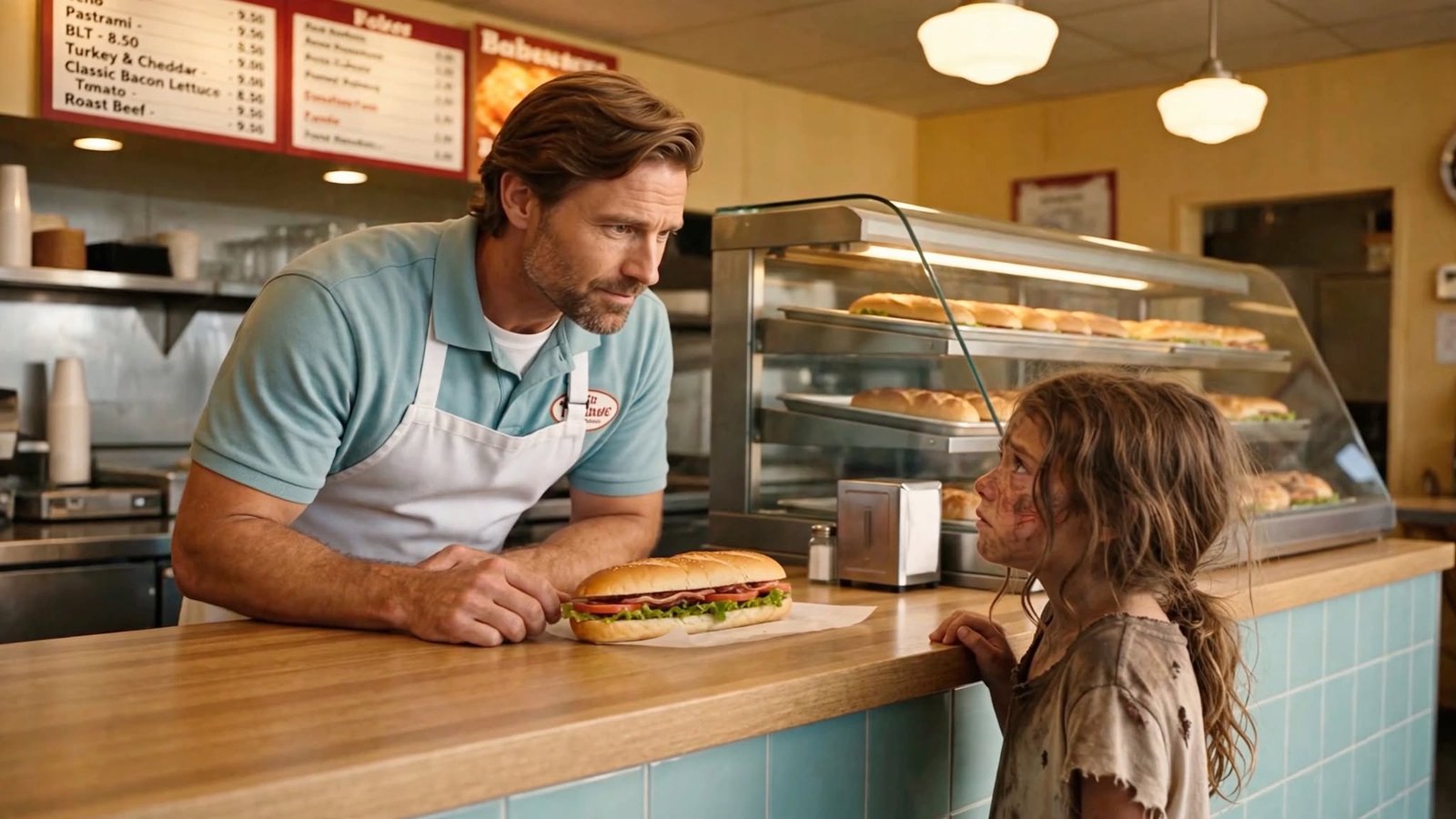
“The little girl at the window,” Ethan said. “You were so thin. You wouldn’t come inside.”
“I was seven,” she said. “My name is Clara. And I’ve carried this paper every single day since.”
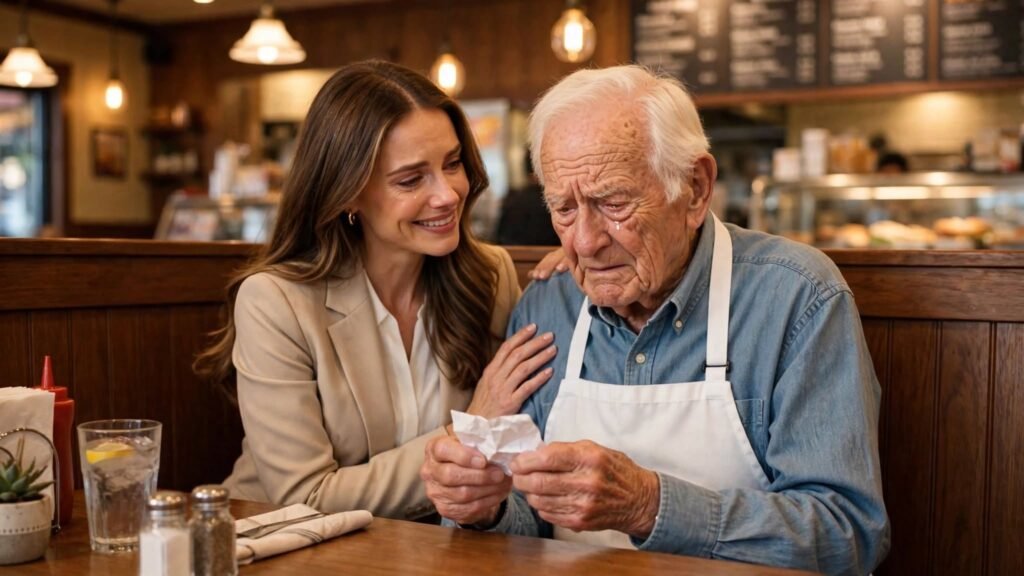
She sat down across from him, her expensive suit wrinkling on the old wooden stool. The security guards stayed by the door.
“I need to tell you what really happened that day,” Clara said quietly. “Because you never knew.”
Ethan waited.
“I had run away from my foster home three days before,” she said. “It was a bad place. They locked me in a closet when I cried. I slept behind a dumpster two blocks from here. And that night…” Her voice shook. “A man in a car had been following me for two days. He kept offering me candy and a warm bed. That night, I was going to say yes.”
Ethan’s face went white.
“Then you gave me a sandwich,” Clara said. “And you wrote on the wrapper. I read those words a hundred times that night. For the first time, I thought maybe I had a someday. So instead of getting in that car, I walked to a police station and asked for help.”
Ethan covered his mouth. Tears ran down his wrinkled cheeks.
“A kind family adopted me a month later,” she said. “I went to school. Then college. I started a company. And the whole time, I had your words in my pocket.”
“I only gave you a sandwich,” Ethan whispered. “It cost me three dollars.”
“It cost you three dollars,” Clara said. “It saved my life.”
She picked up one of the red overdue notices on the counter and frowned.
“Harbor Point Development,” she read. “They’re the ones taking your shop?”
Ethan nodded, ashamed. “They bought the building last year. Tripled my rent. They want to tear down the whole block for luxury apartments. I’ve been here forty-one years, and today they’re kicking me out.”
Clara smiled. It was not a sad smile.
“Not anymore,” she said.
She nodded at one of her guards. He stepped forward and set a thick envelope on the counter.
“I paid your debt this morning,” Clara said. “Every cent. Then I bought the building from Harbor Point. They didn’t want to sell. So I made them an offer they couldn’t refuse.”
Ethan opened the envelope with trembling fingers. Inside was a deed. And the name on it wasn’t Clara’s.
It was his.
“This building belongs to you now,” she said. “Nobody will ever take this place from you again.”
Ethan couldn’t speak. He just stared at the paper, his chest heaving.
“There’s one more thing,” Clara said softly. “Come with me.”
She took his hand and led him to the front window. The same window where, all those years ago, a hungry little girl had stood staring at sandwiches.
Ethan looked outside and gasped.
The sidewalk was full of children. Dozens of them. Maybe a hundred. They stretched all the way down the block. Some were tiny. Some were teenagers. And every single one of them was holding up a small paper wrapper.
“What… what is this?” Ethan stammered.
“Five years ago, I started a foundation,” Clara said. “We feed hungry kids all over the state. Every meal we give out comes wrapped in paper. And on every wrapper, I write the same six words.”
Ethan’s knees went weak. She held him up.
“We’ve fed over two hundred thousand children,” she said, tears streaming now. “And every one of them started with you.”
Across the street, the kids unrolled a huge banner. In bold letters, it read:
ETHAN’S TABLE
The old man pressed his hand against the glass and wept like a child.
“I never knew,” he whispered.
Clara squeezed his hand. “That’s the thing about kindness,” she said. “You never know how far it goes.”